
Design is not just about making things look a certain way. It is about noticing, experimenting, and asking questions about the world around you.
Traveling amplifies this instinct. Every street corner and hidden café becomes a makeshift laboratory for observation. Patterns of light, color, movement, and behavior reveal ideas that are impossible to see from behind a desk. Approaching travel as a design practice means staying curious, paying attention to details that others might miss, and letting experiences shift the way you think about space, interaction, and possibility. Exploration is the method. Reflection is the outcome. Across continents, environments, and cultures, small observations accumulate into bigger insights and different cultural experiences spark curiosity and reshape perspective. Travel gives you the chance to step outside routine, to notice patterns in human behavior, architecture, and natural systems, and to see what works and what doesn’t in real time. These reflections are not just stories of places visited. Instead, they are prompts for thinking differently, for asking new questions, and for connecting creativity, wellness, and design in unexpected ways. Each destination becomes a lens, offering a fresh view of the world and of how we engage with it.
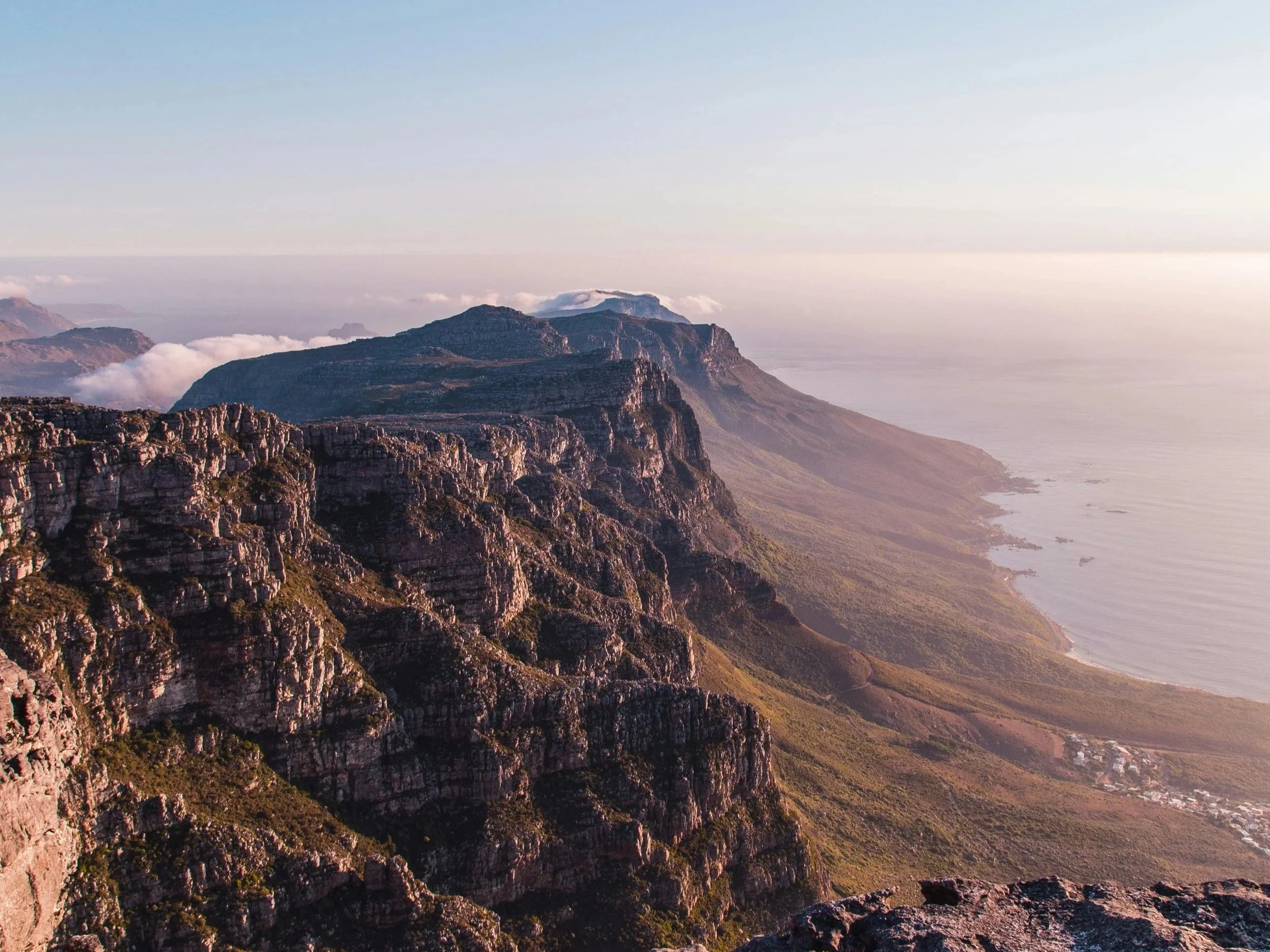
Cape Town
Table Mountain, Scale, and Perspective
Table Mountain is always there. No matter where you are in the city, it sits quietly in the background, steady and unmoving, a constant reference point that reshapes how you perceive everything beneath it. Standing on a street corner, walking through a café, or riding up in a cable car, the mountain feels simultaneously distant and intimate, like a patient observer of everything that happens below. Working and thinking in its presence subtly alters your relationship with urgency, because it is impossible to feel entirely consumed by small problems when something so vast and ancient is within view. The mountain does not demand attention, yet it gently pulls perspective outward, reminding you that time moves differently at different scales. Creativity feels less performative here and more reflective, less about output and more about clarity, as if the landscape itself is asking you to slow down, zoom out, and reconsider what actually deserves your energy. There is also something visceral about the scale. When you hike its trails or watch climbers navigating its ridges, you feel the body’s limits against nature’s enormity, and your mind naturally recalibrates. Decisions you once agonized over start to feel lighter; deadlines shrink in importance. The mountain demonstrates that perspective is not just metaphorical. It can be architectural, environmental, and deeply physical. It teaches the same lesson designers and creative thinkers need: context matters. Before solving a problem or crafting a piece of work, understand the larger landscape it exists in, because clarity emerges only when you see both the micro and the macro together.
There is something grounding about knowing that no matter how complex life feels in the city below, Table Mountain remains exactly where it has always been. It becomes a natural measuring stick, helping you evaluate what is urgent versus what is enduring. Watching clouds move across the mountain throughout the day is a lesson in impermanence, a reminder that even the most solid forms are constantly changing. The shape of the light, the shadows creeping across the slopes, the way fog can hide and reveal the summit within minutes—all of it is a subtle design lesson. This tension between stability and flux mirrors the creative process: ideas, like mountains, are framed by context, but they evolve constantly, shaped by time, perspective, and the environment in which they exist. Creativity, like the clouds, is never static. It needs space to move, shift, and transform, and clarity often emerges when we allow time and perspective to do their work rather than forcing conclusions too soon.
Wandering parts of Cape Town in the shadow of Table Mountain also highlights the importance of space in design. Just as the mountain commands attention without shouting, good design balances presence and restraint. It can guide without forcing, suggest without dominating, and hold both scale and nuance simultaneously. Observing this daily makes it clear that the most profound influence often comes from quiet constancy rather than visible action, and that grounding creativity in something larger than the immediate task allows ideas to expand and settle with intention. In real time, this becomes a lesson in iteration, pacing, and attention: the environment shapes thought not by adding noise, but by creating a canvas where ideas can breathe, evolve, and find their own form.

Costa Rica
Jumping Waterfalls in the Jungle
Costa Rica has a way of pulling you out of your head almost immediately. You arrive with plans, ideas, and a vague sense of what you want to do, and within a day or two you realize none of that really matters. Getting to a waterfall usually means hiking through dense jungle, slipping a little on wet rocks, listening for the sound of rushing water before you ever see it, and making quick decisions about where to step, when to slow down, and when to just go for it. Waterfall jumping turns out to be less about adrenaline and more about presence, because once you are standing at the edge, thinking too much is the only thing that gets in the way. What surprised me most was how quickly that mindset carried over into everything else. After a few days of moving through the jungle, your attention sharpens. You stop multitasking. You notice where your body is in space. You trust instinct more than planning. The environment demands it. The jungle does not reward overthinking, and it does not leave much room for distraction. In that way, Costa Rica feels like a crash course in embodied decision making, where clarity comes from movement and curiosity rather than control.
From a design perspective, this is fascinating. Most modern systems are built to remove uncertainty and eliminate risk, but they also remove engagement in the process. In Costa Rica, the landscape does the opposite. It invites exploration without telling you exactly how to proceed, offering just enough feedback through sound, texture, and terrain to guide you forward. The experience makes it clear that good design does not always mean predictability. Sometimes it means creating conditions where people are fully present, responsive, and engaged with what is right in front of them.
By the end of the trip, creativity feels different. Ideas come while walking, swimming, or sitting near a waterfall, not while trying to force them. There is less pressure to produce and more willingness to explore. Costa Rica reminds you that some of the best thinking happens when you stop trying to optimize and start paying attention, when the environment is allowed to lead and you are willing to follow.

Cabo
Modern Minimalism and the Power of Less
Cabo has a way of making you notice what isn’t there. Walking through its resorts, private villas, and boutique hotels, the first thing that strikes you is the quiet precision of modern minimalism. Lines are clean, materials are honest, and spaces are deliberately unadorned. There’s a rhythm to it: the way a courtyard frames a view of the ocean, how a staircase catches the morning light, or how an open living room invites you to linger without distraction. It is not emptiness—it is intentional space, designed to let the environment, the ocean, and the sky speak for themselves. Minimalism here is instructive. In a world overloaded with options, textures, and stimuli, the careful subtraction in Cabo feels like a relief. Each design choice earns its place. Nothing competes; everything complements. This clarity encourages a different kind of creativity, one rooted in restraint, attention to detail, and thoughtful decision-making. When you remove the clutter, your mind can wander freely, and patterns, insights, and new ideas emerge naturally. The experience reinforces a key principle for designers: simplicity is not absence, it is focus. The environment itself reinforces this mindset. Wide-open skies, unobstructed views, and seamless transitions between indoors and outdoors create a sense of possibility. Architecture here does not dominate; it amplifies. By observing how light, shadow, and proportion interact in these minimalist spaces, you begin to see how subtle interventions can have an outsized impact. It is a reminder that restraint often communicates more than complexity and that leaving room for space, silence, and breathing is as powerful in design as it is in life.
Less is often more, but more in the right places can be transformative. In Cabo, minimalism is about intention. Every material, line, and element has a purpose, so when something bold appears, like a vibrant tile, a dramatic overhang, or a framed ocean view, it immediately feels significant. Restraint amplifies impact. The simplicity around it makes the bold moments stand out and stay with you. For designers, this is a reminder that adding emphasis in the right places creates experiences that linger, guide attention, and shape how people move through a space while still feeling natural.
Minimalism creates freedom. Spaces in Cabo flow effortlessly because every pathway, transition, and functional element is designed intentionally. Indoor and outdoor areas connect seamlessly, and movement feels intuitive. This design reduces friction, letting people explore, reflect, and notice details without distraction. When the brain has space to wander, creativity emerges. Thoughtful design transforms ordinary moments into surprising delights.
Simplicity is a canvas for expression. Open courtyards, clean lines, and subtle materials highlight light, shadow, and movement, turning space into experience. Minimalism invites attention to the details, letting interactions and discoveries emerge naturally. Creative work behaves the same way: reducing clutter allows ideas to unfold, experimentation to feel safe, and subtlety to shine. Spaces and ideas expand when there is room to breathe, and curiosity thrives when there is space to explore.
The most memorable spaces let people and ideas move freely. Walking through downtown Cabo, the openness around buildings gives the mind room to wander. Sightlines, quiet corners, and negative space encourage reflection, discovery, and engagement. Crowded spaces might impress briefly, but open, intentional spaces create lasting inspiration. Minimalist design teaches a clear lesson: impact comes from leaving room for thought, movement, and creativity to emerge naturally.

Miami
Coloring & Designing Out Loud
Miami feels like a city that designs out loud. Color is everywhere, not just on buildings but in clothing, cars, interiors, and the way people move through space. Nothing is shy. Walking through Miami makes you acutely aware of how visual choices shape behavior, confidence, and even ambition. Color here is not decorative, it is communicative. It signals mood, identity, and intention before a word is ever spoken. Spending time in Miami made me think differently about the role of boldness in the design process. In many creative fields, there is a tendency to soften ideas early, to make them more neutral or more broadly acceptable before they are fully formed. Miami does the opposite. Ideas show up fully saturated. They take up space. They are tested in public, refined through reaction rather than hidden behind theory. The city is a reminder that iteration does not always need privacy. Sometimes feedback comes fastest when work is visible, expressive, and unapologetic. The lifestyle mirrors this approach. Wellness, creativity, and work all blur together in ways that are highly visible and often performative. That visibility can be energizing, pushing ideas forward through momentum and confidence, but it can also reveal where stimulation begins to outweigh sustainability. Miami makes it impossible to ignore the question of balance. How much intensity fuels creativity, and when does it become noise? From a design perspective, this tension is instructive. It highlights the importance of knowing when to amplify and when to edit, when to lean into color and when to let something breathe. Miami ultimately taught me that strong design requires clarity of intention. Bold choices work when they are grounded in purpose rather than excess. Color works when it supports identity rather than overwhelms it. The city shows what happens when ideas are allowed to be expressive from the start, and how refinement becomes a process of subtraction rather than restraint imposed too early. Designing in Miami feels like designing in motion, where feedback, visibility, and confidence shape the work in real time.
Color changes how people occupy space and how long they stay in it. Bright, bold colors draw attention, guide movement, and subtly influence how comfortable people feel lingering in a space. Designers often think of color as purely aesthetic, but in practice it communicates hierarchy, mood, and purpose without a word. Observing this in Miami makes it clear that color is not decoration—it is an instrument that shapes behavior. In creative projects, we can use color strategically to guide attention, support interaction, or create emotional cues, rather than simply making things “pretty.”
Design that is meant to be seen behaves differently than design meant to disappear. When an object or space is designed for visibility, it changes how people interact with it, critique it, and ultimately use it. Miami’s architecture and lifestyle show that putting work in the public eye forces rapid feedback loops. Ideas are tested in motion, refined through observation, and either embraced or rejected quickly. For designers, this is a reminder that visibility is part of the process: exposing a concept early can accelerate learning and clarify what really works versus what looks good in theory.
Editing is easier once something has been fully expressed. Boldness and saturation teach a subtle but critical lesson: it is easier to remove elements than to add them effectively. Miami encourages you to go big first—express, experiment, saturate—and only then refine. In design practice, this is essential: restraint works best when it is intentional, not imposed before the idea has fully formed. The process of subtraction becomes a tool for clarity and impact, rather than a limitation on creativity.